
You’d like to explore rural Japan. But once you start looking, you may find yourself wondering: where should you actually go?
Some trips take you through historic streets; others lead you to beautiful countryside. But a visit to rural Japan can also be a chance to talk with the people who live there and step, just a little, into their everyday lives.
For anyone searching for “rural Japan towns,” this article introduces three places: Miyama, Tsumago, and Watarai in Mie Prefecture. In the second half, I’ll take you to the rice fields I farm in Watarai and share what walking with a farmer can reveal about life in Japan’s satoyama landscapes.
Which Rural Japan Towns Fit Your Trip?
Where you go in rural Japan depends on what you’d like to see. You might be drawn to traditional buildings and history, or curious about farming life as it continues today. Let’s begin with Miyama, Tsumago, and Watarai, and the different experiences each offers.
Miyama and Tsumago: Architecture and History
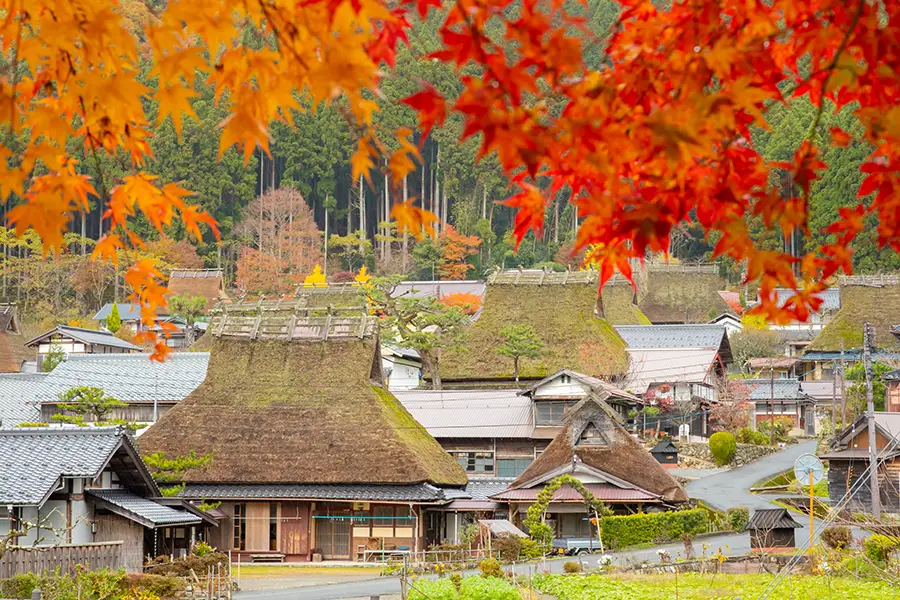

For traditional buildings and village scenery, Miyama in Nantan, Kyoto Prefecture, is one of the well-known options. In Kayabuki no Sato, in particular, you can walk through a village of thatched-roof houses. Guided walking tours in English are also available.
It’s a place to consider for a trip beyond Kyoto city to explore the scenery and daily life of a Japanese farming village.
For history and the culture of Japan’s old travel routes, there’s Tsumago-juku in Nagiso, Nagano Prefecture.
Tsumago-juku prospered as a post town on the Nakasendo, the route connecting Edo and Kyoto during the Edo period. Its historic streetscape has been preserved, and in 1976 it was designated an Important Preservation District for Groups of Traditional Buildings.
Miyama offers the scenery of a farming village; Tsumago tells the story of a post town and an old travel route. Both are part of rural Japan, but they offer quite different perspectives.
Watarai: A Starting Point for Exploring Farm Life
What about those who want to see rural life as it is lived today? For them, I’d like to introduce Watarai, a town in southern Mie Prefecture.
Watarai isn’t lined with famous historic buildings. There are rice fields, mountains, and rivers, with people still living and working among them. That’s what interests me about it. Rather than visiting a place developed around tourism, you can see everyday life in rural Japan.
You can walk beside the rice fields and talk with a farmer, follow the water back toward its source, and learn about the place where the rice you eat is grown. For someone looking for that kind of trip, I think Watarai is worth considering.
What Makes Watarai Worth a Closer Look?
When you look out over rice fields and mountains, it’s easy to focus on the natural beauty. Learning about the people whose lives sustain that scenery can change how you see it. Through what I noticed after returning to Watarai, I’d like to explain the connection between this town and satoyama.
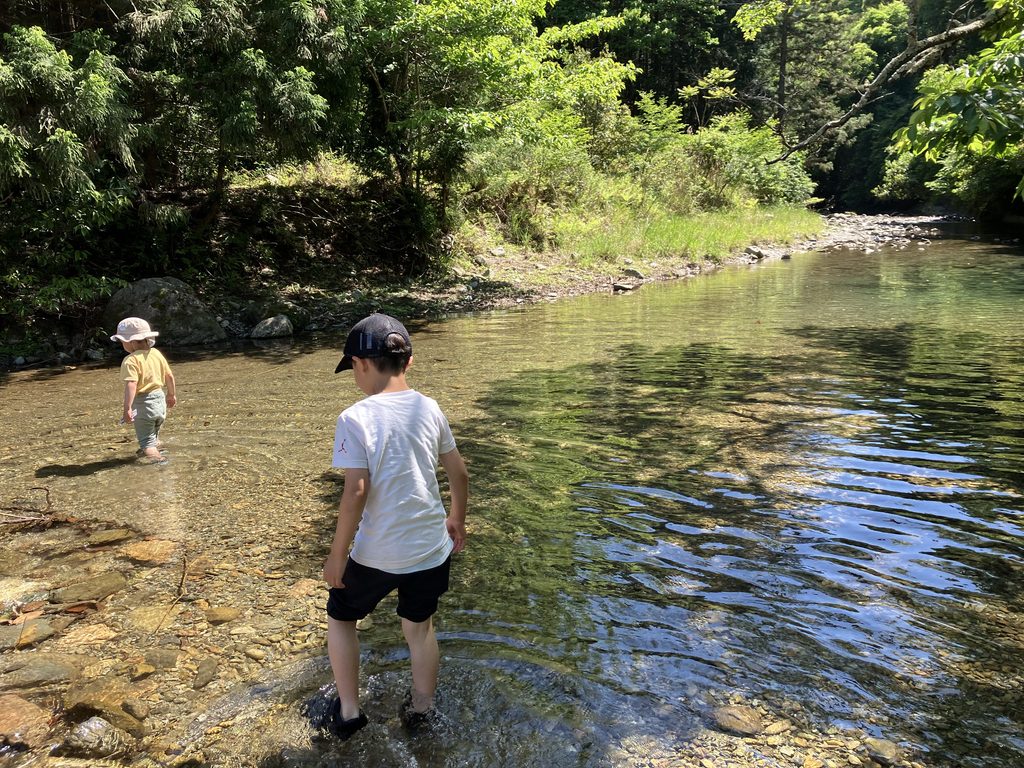
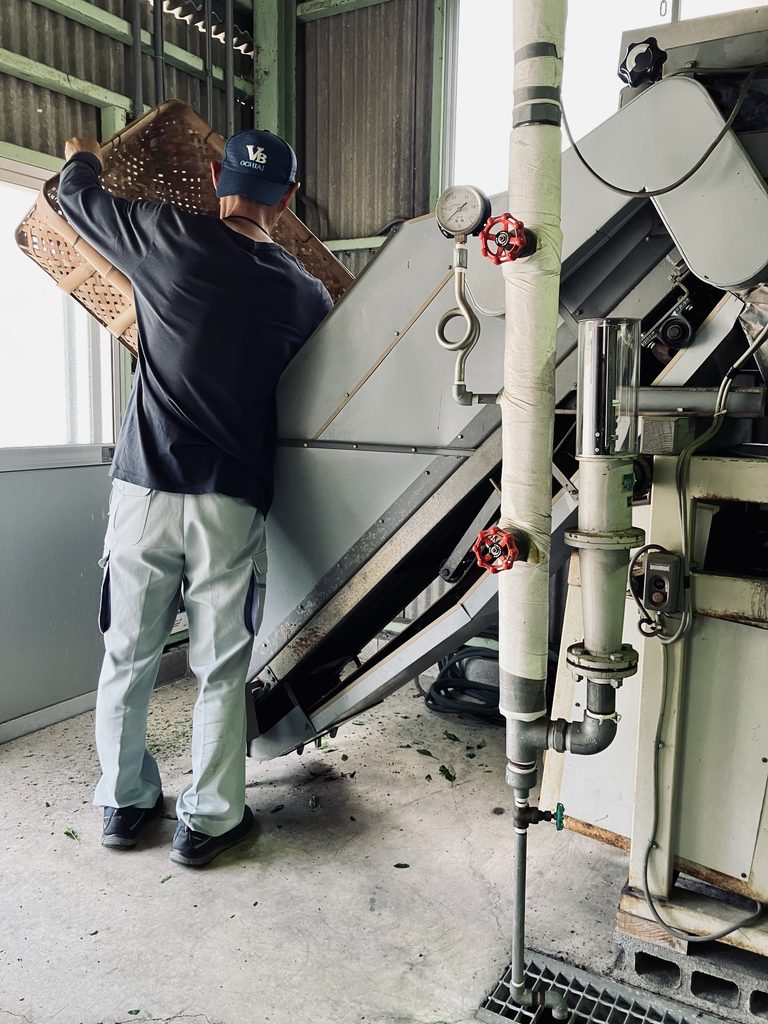
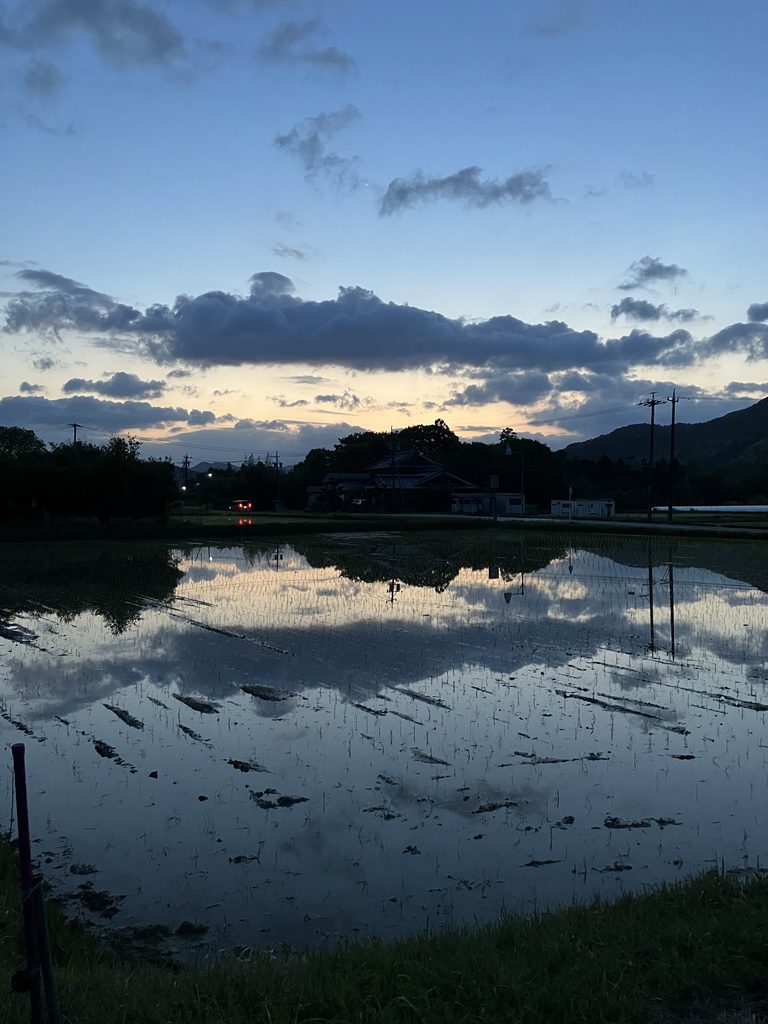
A Rural Community in Mie
Watarai is a town in Watarai District, Mie Prefecture, with a population of 7,336 as of August 31, 2026.
I was born and raised here, then moved away. After working overseas and in cities, I’ve returned to live in Watarai. I now grow Koshihikari rice on about six hectares of rice fields.
Coming back, I began to notice how much work lay behind the scenery I had taken for granted as a child.
Take the irrigation channel beside a rice field. To me, it used to be just a place where water flowed. Once I started growing rice, I began to wonder where that water came from, who managed it, and when it should be let into the fields.
The same goes for the neatly cut grass along the field banks. It doesn’t stay tidy by itself. The scenery looks the way it does because someone cuts the grass, clears the channels, and checks the fields.
As a visitor, you might see a beautiful rural landscape. From the perspective of someone who lives here, it’s a landscape built on people’s daily work.
Satoyama: A Landscape Shaped by People
There’s a Japanese word for this kind of landscape: satoyama. The word may bring to mind beautiful, untouched nature. In fact, it describes places where mountains, woods, fields, waterways, and villages have been maintained through their connection with people’s lives.
Japan’s Ministry of the Environment describes satochi-satoyama as areas made up of settlements, farmland, ponds, secondary woodland, and other features, where the environment has been shaped and maintained by human activities, including farming and forestry.
In other words, satoyama is not nature that survived because people stayed away. People cultivate the fields, work in the mountains, use the water, and cut the grass. Over time, that repeated work has shaped the landscape.
This is a perspective I hope you’ll keep in mind when walking through Watarai. Look at the mountains, the river, and the rice fields. Rather than seeing them separately, ask yourself how they are connected. An ordinary rural scene may start to look a little different.
What Can You Learn on a Farmer-Led Rice-Field Tour?
Looking at rice fields and walking through them with the person who grows the rice are different experiences. Peering into an irrigation channel or asking about a farmer’s daily work can bring the place where rice grows a little closer to you. Using my own fields as an example, here’s what I’d like to share when showing someone around.
Follow the Water, Not Just the View
If I were showing you around the fields, one of the first things I’d want you to notice would be the water. Our fields use water from the Shimesasu River. When you visit a rice field, your eyes naturally go to the rice plants. But water is essential to growing rice.
“Where does this water come from?”
That simple question can open up all kinds of conversations. Water doesn’t just find its own way into the fields. We let it in or stop the flow according to the time of year and the condition of the rice plants.
Since becoming a farmer, I’ve also paid much more attention to the rain. When I worked for a company, I might simply have thought, “It’s raining today.” Now I wonder, “Is the water in the fields all right?” The same weather looks different when your role changes. That’s something farming has taught me. On a rice-field tour, I hope we can go beyond simply admiring the view. By looking at the channels and touching the soil, we can think together about how people and nature have lived alongside each other.
Ask About the Work Behind Each Bowl of Rice
When people think of growing rice, planting and harvesting may be the first things that come to mind. Those are important jobs, of course. In our fields, we plant around May and harvest around mid-August.
But there’s work to do in between, too. We check the water, watch the rice grow, cut the grass, and keep an eye on the weather. Much of that work is difficult to see if you’re simply looking at a field from the outside.
If you have a chance to walk with a rice farmer, try asking questions like these:
“What are you paying the most attention to in this field today?”
“What parts of growing rice are difficult for someone outside farming to see?”
“What would you like the people who eat your rice to know?”
These aren’t questions with answers you need to memorize. I’d be happy if they helped you discover who is behind the bowl of rice you eat, and what work they do.
Depending on your interests and the condition of the fields, you may also be able to touch the soil and water, explore the countryside in a low-speed electric vehicle known as Green Slow Mobility, or make and eat onigiri rice balls using our rice.
Instead of starting with food on your plate, try looking at it from the place where it grows. That alone might change the way you see rice.
When Should You Visit the Rice Fields?
Even in the same fields, the scenery and the farmer’s work change with the seasons. Before making the trip, it helps to choose a time that matches what you’d like to see and prepare for walking outdoors. Here’s how to think about when to visit, what to wear, and what to bring.
Choose a Crop Stage, Not Just a Calendar Month
“When is the best time to visit the rice fields?” I’m often asked this, but there isn’t one right answer.
Around May, you can see fields that have just been planted. The rice gradually grows, and by summer the fields are a vivid green. In our area, the harvest season begins around mid-August. Each stage has its own scenery.
So rather than answering “Which month is best?” I’d prefer to ask, “What would you like to see?” Would you like to watch the planting, see the rice as it grows, or hear about the harvest? Or would you simply like to talk about farming life, whatever the season? Knowing what interests you helps me suggest a suitable time.
Farming means working with nature, so the fields won’t look exactly the same on the same date every year. Planting and harvesting dates also change with the weather and the condition of the rice. Please check before visiting if there’s a particular activity you’d like to see.
Prepare for an Outdoor Working Environment
A rice field is a farmer’s workplace, not a visitor attraction. The ground may be uneven, and your shoes may get muddy. In summer, the sun can also be strong.
Wear clothes and shoes that are comfortable for walking and that you don’t mind getting a little dirty. Bring a hat, something to drink, and a towel as appropriate for the season.
At the same time, touching the soil and water is part of the pleasure of visiting the fields. Come close to the fields, feel the breeze, and touch the soil. There are smells and temperatures that a photograph can’t convey.
Remember, though, that machinery may be working in the fields, and they aren’t places you can enter freely. Please follow the farmer’s guidance so you can enjoy your visit safely.
How to Plan a Rice-Field Visit in Watarai
If you’d like to walk through the rice fields in Watarai, start by thinking about how you’d like to spend your time. There are a few things we should discuss beforehand so I can plan a visit around your interests. Here’s what to arrange, and what to keep in mind when stepping into a local community’s daily life.
Confirm Access, Language, and What Is Included
The rice-field tours I guide in Watarai are private visits for one to three people. I can guide you in English as well as Japanese. Rather than taking everyone along a fixed route, I plan each visit around what the participants are interested in.
You might want to walk beside the fields and irrigation channels.
You might want to hear about a farmer’s work.
You might want to touch the soil and water.
You might want to explore the rural scenery in a Green Slow Mobility vehicle.
Or you might want to make and eat onigiri with locally grown rice.
Everyone’s interests are different. Before your visit, please tell me what you’d like to see and what you’d like to learn. We can also discuss your preferred meeting point and arrange it together.
Farm work varies with the season, weather, and condition of the fields. Please ask in advance if you’re hoping for a particular experience, such as rice planting or harvesting.
Respect the Fields and the People Who Work There
There’s one final thing I’d like you to keep in mind. These fields and villages are part of someone’s everyday life. I grow rice here, and the people of this community live here.
That means you can’t simply enter the fields or touch crops and farm equipment without permission. Please also ask before photographing someone.
But I don’t think this needs to feel like an inconvenience because the place wasn’t designed for tourists. In fact, there are things you can see precisely because it wasn’t built around tourism.
Someone is cutting the grass. Water is flowing through a channel. A small farm truck drives past a rice field. A farmer is looking over the rice plants, checking on something. These are ordinary scenes I’ve known since childhood.
Yet when I walk with people from outside the area, they sometimes ask, “What’s this?” or “Why do you do that?” Only then do I sometimes realize that something so familiar to me might not be part of life in a city.
That’s why I don’t think a trip to rural Japan has to revolve around famous sights.
For traditional buildings and history, consider Miyama or Tsumago. For rice fields, the work of farmers, and life as it continues in Japan’s satoyama, consider Watarai.
The question isn’t which place is best. It’s what you’d like to see there, and who you’d like to talk to. That might be an interesting way to choose your next destination.
After a walk through the rice fields, even the familiar bowl of rice you eat without much thought may look a little different.
コメント